TL;DR:
- Holistic dental wellness includes daily natural habits like brushing, interdental cleaning, tongue scraping, hydrating, and dietary management. These practices, combined with natural remedies and professional assessments, help prevent systemic health issues linked to oral health. Consistent small changes and personalized care plans support long-term oral and overall wellbeing.
Holistic dental wellness steps are the daily practices and professional habits that protect your teeth, gums, and whole-body health at the same time. Unlike conventional dentistry, which often treats problems after they appear, this integrative approach combines natural oral care with evidence-based professional oversight to prevent issues before they start. The connection between oral health and systemic conditions such as heart disease and diabetes is well established, and whole-body oral health is now recognised as a cornerstone of modern preventive care. This guide walks you through every stage, from daily habits to building a personalised plan that fits your life.
What daily natural oral care habits support holistic dental wellness?
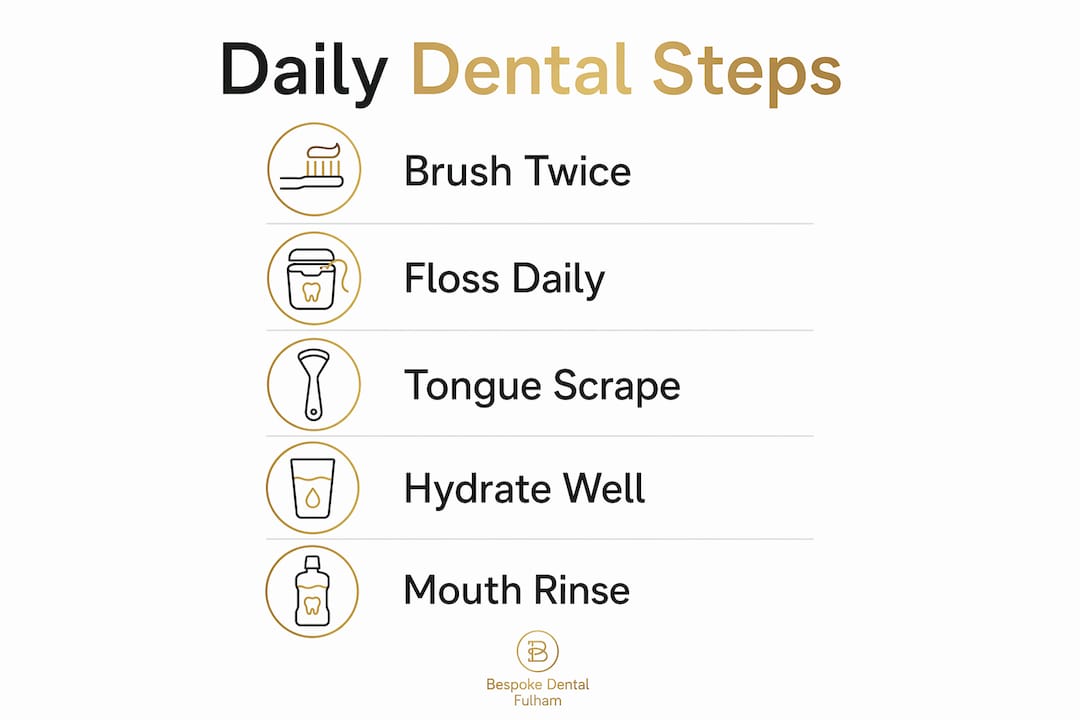
The foundation of any sound dental wellness routine is consistent daily practice. Five core pillars form the basis of natural oral hygiene: brushing twice daily for at least two minutes with a soft-bristled brush, interdental cleaning, tongue scraping, adequate hydration, and dietary management that reduces sugar and acidic foods. Each pillar addresses a different risk area, and skipping one weakens the whole routine.
The five daily steps
- Brush for two full minutes, twice daily. Use a soft-bristled brush and gentle circular strokes. Hard bristles and aggressive scrubbing wear enamel over time.
- Clean between teeth every day. Floss, interdental brushes, or a water flosser all work. The goal is removing plaque from surfaces a toothbrush cannot reach.
- Scrape your tongue. Two to three passes with a tongue scraper each session remove bacteria that cause bad breath and contribute to gum inflammation.
- Stay well hydrated. Adequate water intake supports saliva production, which naturally cleanses the mouth and maintains a healthy microbial balance.
- Manage your diet. Limit sugary snacks and acidic drinks to mealtimes. Eating them throughout the day prolongs acid exposure on enamel.
Beyond these five steps, several complementary habits add real value:
- Saltwater rinse before brushing. A rinse with warm salted water loosens debris and creates an alkaline environment that supports healthy bacteria before you brush.
- Oil pulling. Swishing a tablespoon of coconut or sesame oil for 10–15 minutes may reduce plaque-forming bacteria. Use it as a morning ritual before eating or drinking.
- Green tea rinse. Green tea contains catechins, compounds that research links to reduced gum inflammation. A plain, unsweetened cup used as a rinse after meals is a low-cost addition.
Pro Tip: If you find a full two-minute brush uncomfortable, start with 30 seconds and build up gradually. Consistency matters far more than perfection, and a shorter daily brush beats an occasional long one every time.
How can awareness of whole-body health enhance your dental wellness routine?
Your mouth does not operate in isolation. Oral health connects directly to systemic conditions including type 2 diabetes, cardiovascular disease, and chronic inflammation. Gum disease, for example, is associated with elevated blood sugar levels, and treating periodontal disease can improve glycaemic control in diabetic patients. Understanding this link changes how you approach your daily routine.

Integrative dentistry methods go further by considering tooth meridians, a clinical framework that maps individual teeth to corresponding organs and body systems. Tooth meridian charts are used in biological dentistry to guide assessment and treatment planning, connecting dental findings to broader health patterns. You do not need to memorise these charts, but knowing they exist helps you appreciate why a thorough dental assessment covers far more than just cavities.
Reflecting on your personal health history is a practical starting point. Ask yourself:
- Do you have a diagnosed condition such as diabetes, heart disease, or an autoimmune disorder?
- Is your diet high in processed foods, refined sugars, or acidic drinks?
- Do you experience chronic stress, which raises cortisol and can worsen gum inflammation?
- Do you grind your teeth at night, a common stress response that accelerates enamel wear?
Stress management belongs in your oral care plan. Mindfulness practices, regular sleep, and even brief breathing exercises before bed reduce the physiological stress response that drives teeth grinding and dry mouth. Dry mouth, in turn, reduces saliva and raises the risk of decay. Treating your oral health as part of your general wellbeing, rather than a separate task, is the defining shift that makes this approach work.
What natural remedies complement holistic oral care and professional dental oversight?
Natural remedies have a genuine supporting role in oral care, provided you use them correctly. Saltwater rinses, oil pulling, and green tea are the three most evidence-supported options. Each reduces bacterial load or inflammation in a different way, and each is safe when used as directed.
Here is a clear breakdown of what each remedy does and where caution is needed:
- Saltwater rinse: Reduces oral bacteria and soothes inflamed gum tissue. Safe for daily use. Use warm water with a small amount of salt; do not swallow.
- Oil pulling: May reduce plaque and gingivitis markers. Spit the oil into a bin, not the sink, to avoid blocking drains. Not a substitute for brushing.
- Green tea: Rich in catechins that fight bacteria linked to gum disease. Drink plain and unsweetened, or use as a rinse after meals.
- Essential oils (e.g., tea tree, clove): Must be heavily diluted before any oral use. Undiluted essential oils cause chemical burns to soft tissue and should never be applied directly to gums or teeth.
- Baking soda: Occasionally useful for whitening, but overuse degrades enamel due to its abrasive nature. Limit to once or twice per week at most.
Safety note: Natural remedies supplement professional dental care. They do not replace clinical examinations, professional cleaning, or prescribed treatments. If you have active gum disease, tooth decay, or oral pain, see a dental professional before relying on home remedies alone.
Pro Tip: Introduce one new remedy at a time and observe your mouth’s response over two weeks. Adding several changes at once makes it impossible to identify what is helping and what is causing irritation.
Natural remedies work best alongside regular professional hygiene appointments, not instead of them. Think of them as daily maintenance between professional visits, not a replacement for clinical care.
How to create a personalised dental wellness plan tailored to your needs
A personalised plan starts with an honest self-assessment. Thorough integrative dental appointments typically include up to a 120-minute intake covering full health history, nutrition, stress levels, and a four-phase assessment of soft tissue, jaw, bite, and overall oral condition. That clinical model gives you a useful template for your own self-review at home.
Follow these steps to build your plan:
- Audit your current habits. Write down what you actually do each day, not what you intend to do. Note gaps: missed flossing, irregular brushing times, high sugar intake.
- Review your health history. List any systemic conditions, medications, or lifestyle factors that affect your oral health. Certain medications cause dry mouth; some conditions increase gum disease risk.
- Choose biocompatible products. Biological dentistry prioritises materials and products that work with the body rather than against it. Look for fluoride-free options if you prefer them, but discuss the trade-offs with your dental professional first.
- Set a professional care schedule. Most adults benefit from a hygiene appointment every six months. If you have active gum disease or a history of decay, quarterly visits are more appropriate.
- Track progress monthly. Note changes in gum sensitivity, bleeding on brushing, or tooth sensitivity. These are early signals that something in your routine needs adjusting.
The table below shows how home practices, natural remedies, and professional care each contribute to a complete wellness routine:
| Practice type | Role | Frequency |
|---|---|---|
| Daily brushing and flossing | Removes plaque and prevents decay | Twice daily |
| Tongue scraping and rinsing | Reduces bacteria and freshens breath | Daily |
| Oil pulling and green tea | Supports gum health and microbial balance | Three to five times per week |
| Professional hygiene cleaning | Removes tartar and detects early problems | Every three to six months |
| Comprehensive wellness assessment | Reviews systemic links and updates care plan | Annually or as needed |
For practical dental wellness tips in London, the key is building a plan you will actually follow, not the most ambitious one you can imagine.
What common challenges arise in holistic dental care and how to overcome them?
Sustaining a consistent oral care routine is harder than starting one. The most common obstacles are dental anxiety, sugar cravings, gag reflex during brushing, and simply running out of time in the morning.
Dental anxiety affects more adults than most people admit. A trauma-informed approach means starting small: begin with 30 seconds of brushing, use a smaller brush head, and build up gradually. Water flossers are a useful alternative for patients who find traditional floss uncomfortable or triggering. The goal is consistency, not clinical perfection.
- Sugar cravings: Replace sugary snacks with whole fruits, nuts, or cheese. These satisfy cravings while being far less damaging to enamel. Eating sugar at mealtimes rather than between meals significantly reduces acid exposure time.
- Gag reflex: Try breathing through your nose while brushing the back teeth. A smaller brush head also helps. Some patients find that brushing in a slightly different position, leaning forward rather than standing upright, reduces the reflex.
- Time pressure: Attach your oral care routine to an existing habit. Brush immediately after your morning coffee or directly before your evening shower. Habit stacking removes the decision-making that leads to skipped sessions.
- Inconsistent motivation: Connect your oral care to a goal you care about, whether that is fresher breath, a brighter smile, or reducing your risk of heart disease. Abstract health goals are harder to sustain than personal, specific ones.
Pro Tip: Set a two-minute timer on your phone for brushing. Most people who think they brush for two minutes actually stop at 45 seconds. The timer removes the guesswork and builds the habit faster.
A patient-centred approach to dental care acknowledges that real life gets in the way. The aim is progress, not perfection.
Key takeaways
Consistent daily habits combined with periodic professional care form the most effective foundation for long-term oral and whole-body health.
| Point | Details |
|---|---|
| Daily habits are non-negotiable | Brush twice daily for two minutes, clean between teeth, and scrape your tongue every day. |
| Systemic health links matter | Conditions like diabetes and heart disease connect directly to gum health; factor them into your routine. |
| Natural remedies supplement, not replace | Saltwater rinses, oil pulling, and green tea support professional care but cannot substitute for it. |
| Safety guides natural remedy use | Essential oils must be diluted; baking soda risks enamel damage if used too frequently. |
| Personalised plans outperform generic ones | A self-assessment covering health history, diet, and stress produces a routine you will actually maintain. |
Why small, consistent changes matter more than dramatic overhauls
I have seen patients arrive convinced they need to overhaul everything at once: new toothbrush, new diet, new supplements, new routine. Almost none of them sustain it past the first month. The patients who make lasting progress are the ones who change one thing, bed it in, and then add the next step. That pattern is not a compromise. It is how behavioural change actually works.
What strikes me most about the integrative approach is how it shifts the framing. Oral care stops being a chore you do to avoid problems and becomes something you do because you understand what your mouth tells you about the rest of your body. When a patient learns that their bleeding gums may be connected to their stress levels or their diet, they engage differently. They ask better questions. They notice more.
The science here is not fringe. The mouth-body connection is supported by decades of research, and holistic wellness principles are increasingly integrated into mainstream preventive medicine. The caution I would add is this: ground everything in evidence. Natural remedies with genuine support are worth using. Claims that diet alone can reverse established gum disease or that supplements replace professional cleaning are not. A good practitioner will tell you the difference clearly.
Periodic professional assessments are not a sign that your home routine has failed. They are the tune-up that keeps the whole system working. I recommend treating your annual comprehensive dental assessment the same way you treat an annual health check. It is not reactive. It is how you stay ahead.
— Amit
Bespokedentalfulham: supporting your dental wellness in Fulham
Bespokedentalfulham offers comprehensive private dental care in Fulham, London, built around the same integrative principles covered in this guide. Every new patient receives a thorough assessment that covers health history, systemic connections, and personalised care planning, not just a check for cavities.
Whether you are looking to address gum disease treatment or explore professional hygiene therapy as part of a wider wellness routine, the team at Bespokedentalfulham uses biocompatible materials and evidence-based techniques to support your long-term oral health. Patients in Fulham, Parsons Green, Chelsea, Hammersmith, and Putney are welcome to book a consultation and discuss a plan tailored to their specific needs and goals.
FAQ
What are the core holistic dental wellness steps?
The core steps are brushing twice daily for two minutes, interdental cleaning, tongue scraping, adequate hydration, and dietary management to reduce sugar and acid. These five daily habits form the foundation of any integrative oral care routine.
Can natural remedies replace professional dental cleaning?
Natural remedies cannot replace professional cleaning. Saltwater rinses, oil pulling, and green tea support gum health between appointments but do not remove tartar or detect early decay, which require clinical tools.
How does stress affect oral health?
Chronic stress raises cortisol levels, which worsens gum inflammation and increases the likelihood of teeth grinding. Managing stress through sleep, exercise, and mindfulness directly supports better oral health outcomes.
How often should I see a dental professional for preventive care?
Most adults benefit from a professional hygiene appointment every six months. Those with a history of gum disease or frequent decay should attend every three months for closer monitoring.
Is oil pulling safe to use daily?
Oil pulling is generally safe for daily use when done correctly. Swish for 10–15 minutes, then spit into a bin rather than the sink. It is a supportive practice, not a substitute for brushing or flossing.